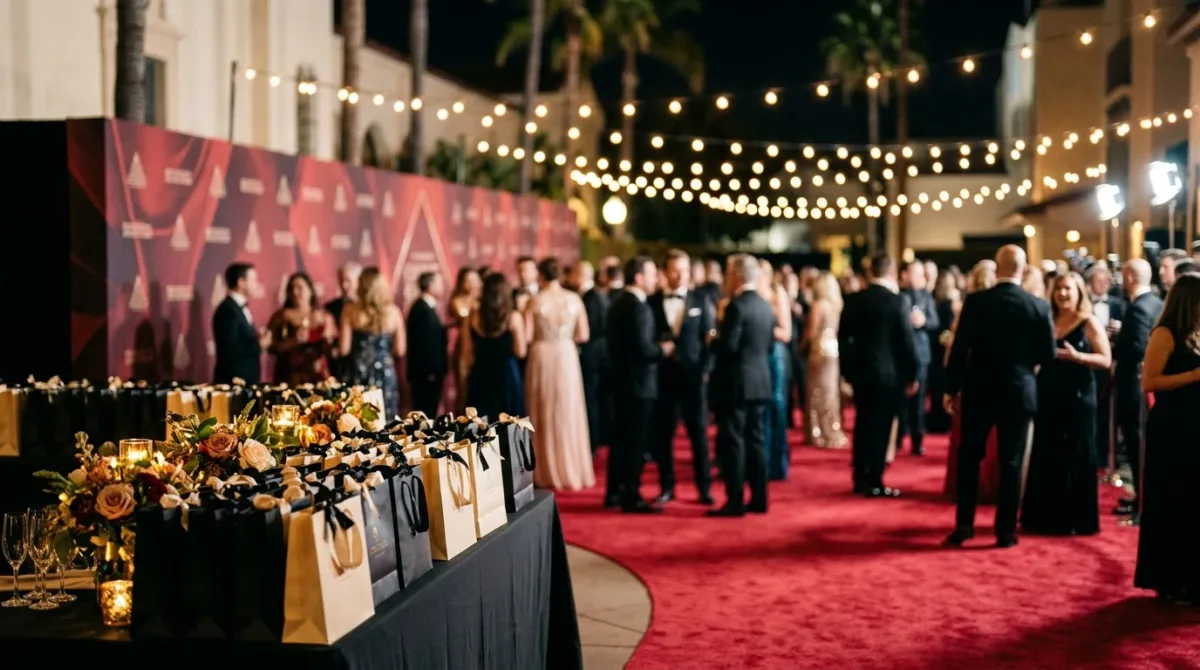
Universal put an estimated $25.7 million in national TV media behind Oppenheimer's Oscar run between January 2023 and February 2024, the single largest ad outlay among that year's Best Picture nominees, according to a Variety analysis of ad-tracking data (SRC-02). Apple spent $17.8 million pushing Killers of the Flower Moon over the same stretch. Three nominees ran zero national TV ads and still landed nominations.
That gap is the whole story of modern awards campaigning. There is no entry fee to compete for an Oscar or an Emmy, but there is a very real cost to being seen, remembered and ranked by the few thousand people who actually vote. The spread between a $25.7 million push and a $0 one is not an oversight. It is a budgeting decision every studio and streamer makes separately, film by film, category by category, every season.
That decision has quietly become one of the more predictable line items on a studio's marketing calendar, sitting alongside theatrical and streaming launch spend rather than replacing it. A film's box office run and its awards run are financed on different clocks, with the second one often starting just as the first is winding down.
Why Do Studios Spend Millions Just To Ask For A Vote?
Because Academy and Television Academy voters are flooded with hundreds of eligible titles every cycle, and a campaign is the only tool a studio has to keep its film or show in front of that specific audience for months. Paid media, screenings and consultants exist to manufacture repeated exposure inside a compressed voting calendar.
The Academy's own rules govern how far that exposure can go. The Academy of Motion Picture Arts and Sciences approved updated Campaign Promotional Regulations for the 99th Oscars, published May 1, 2026, which permit screenings with Q&A panels held before nominations to run with up to two moderators instead of one, and now require FYC eblasts and calendar listings sent through an Academy-approved mailing house to include contact information so members can request accessibility accommodations (SRC-01). The rules regulate conduct with voters, not how much a studio can spend getting a film in front of them in the first place.
That distinction matters for how the whole system is built. Campaign rules shape the format of screenings, mailings and events a studio can run, which pushes the money toward reach and repetition rather than direct persuasion: getting a title mentioned, screened and remembered more often than the hundreds of other eligible titles competing for the same short list of ballots.
How Much Does A Real Campaign Cost?
There is no single published number, because no regulator forces studios to disclose it and campaigns are folded into broader marketing budgets that rarely get broken out publicly. What is visible comes from ad-tracking firms and reporters piecing together national TV buys, trade coverage of FYC events, and the occasional studio boast about a rival's spending. The figures below are the ones that made it into public reporting, not a full accounting of any single campaign.
Individual line items run from tens of thousands of dollars to tens of millions, depending on how hard a studio decides to push. A single FYC screening can run roughly $50,000, and a DVD or physical screener mailing to voters can reach six figures on its own, according to awards-season reporting on Netflix and Amazon's campaign spending compiled by Fortune (SRC-03). Add national television advertising and the number climbs fast: Variety's tracking put Warner Bros.' Barbie campaign at $9.6 million in national TV spend alone, not counting its cross-promotional and social media activity, while The Holdovers, American Fiction, Poor Things and Maestro each landed between $4 million and $6 million (SRC-02).
The scale is not new. Fortune traced the modern arms race back to HBO's 1993 Emmy campaign, which set what was then a record at $1 million and now reads as a rounding error against current streamer budgets (SRC-03). By 2019, that same reporting cited Netflix's outlay on Roma's Oscar campaign at nearly $60 million, a single-film budget that exceeded what most studios spend marketing an entire slate.
What separates streamers from legacy studios in this fight is not the willingness to spend, but the fact that a wide theatrical release already funds a marketing operation that awards season can lean on. A streamer backing a limited-release contender is often building the campaign closer to zero, which is part of why streamer awards budgets can read as outsized next to a studio's theatrical marketing spend.
Where Does The Money Actually Go?
Three buckets absorb most of a campaign budget: paid media, in-person events, and the consultants who run the whole operation. National TV and streaming ads buy repeated visibility with voters who may never watch a screener. FYC screenings, receptions and Q&A panels, the kind the Academy's regulations specifically govern the format of, build the in-person relationships that consultants say still move undecided voters (SRC-01). Screener mailings and awareness campaigns round out the spend, with individual efforts sometimes running into six and seven figures on their own, per Fortune's reporting on the specialist consultants who plan them (SRC-03).
Why Do Some Best Picture Nominees Spend Zero On National TV Ads?
Because a campaign is a bet a studio chooses to place, not a requirement. Past Lives, The Zone of Interest and Anatomy of a Fall all reached the 2024 Best Picture lineup with no national TV ad spend and minimal streaming impressions tracked, according to Variety's data (SRC-02). Smaller distributors without a Barbie-sized marketing budget instead lean on festival buzz, critics' groups and word of mouth among voters, a cheaper path that can still land a nomination if the film itself does the work.
Variety's own analysis notes that TV spending has not proven to be a reliable predictor of who wins, since the prior year's Best Picture winner, Everything Everywhere All At Once, also skipped national television advertising entirely (SRC-02). A campaign buys attention. It does not buy a ballot.
Who Actually Profits From Awards Season?
Beyond the eventual winners, the campaign economy itself is a small industry: media buyers, screening venues, mailing houses and awards strategists all get paid whether or not their client wins. Fortune's reporting describes campaign consultants pitching networks on individual efforts running past a million dollars apiece, a business built on studios competing against each other's spending rather than only against the films themselves (SRC-03). The result is a season where the vote is free, but staying in front of the people casting it rarely is.
None of that spending guarantees a win, and Variety's own tracking of ad-free nominees makes the point plainly (SRC-02). But a campaign budget does something narrower and more reliable than winning: it buys a film a place in the conversation long enough for voters to remember it exists at all, which for most titles is the entire fight.
For a related showbiz perspective, read Record $430 Million Weekend Tests AMC's Billion-Dollar Theater Bet.
For more context, read How Nielsen Actually Measures What America Is Streaming.