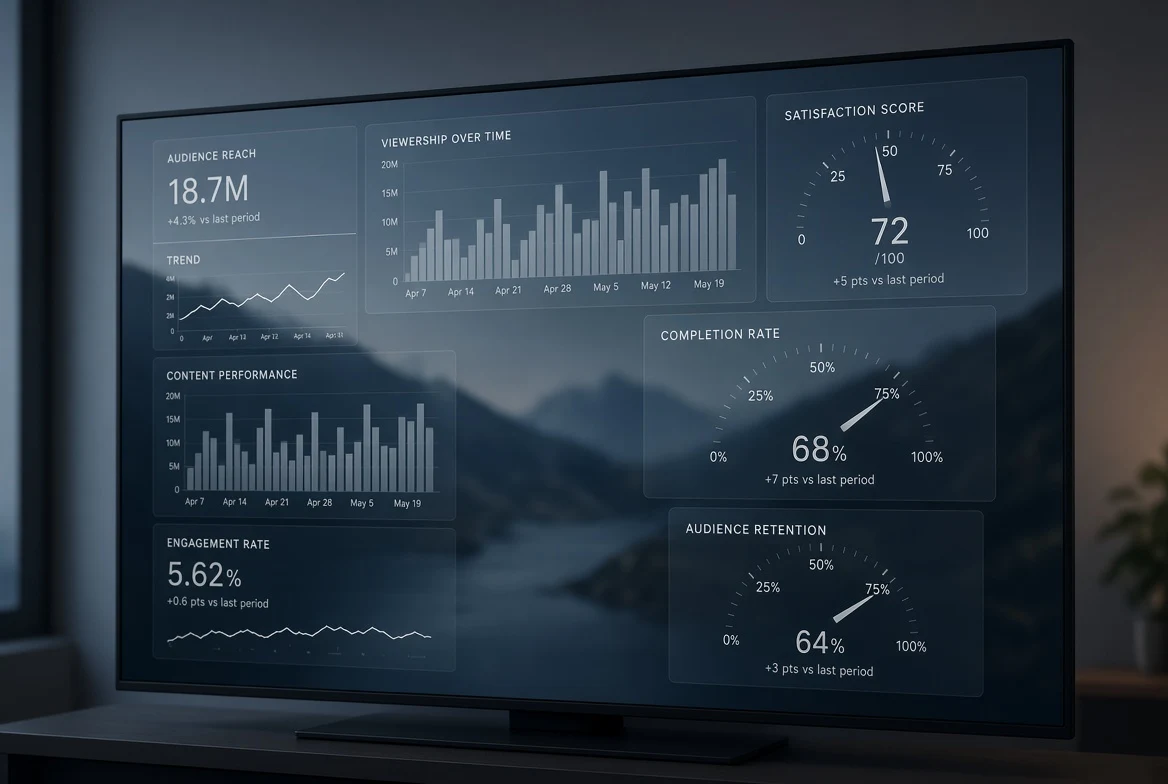
Streaming platforms decide whether to renew or cancel a show by weighing how many hours members watched, what share of viewers finished the season, how much a second season would cost, and whether the show brings in or keeps subscribers — measurements the platforms publish in part through their own weekly top-ten charts and half-yearly engagement reports. Netflix began publishing global hours-viewed data for its weekly Top 10 in 2021 and detailed biannual engagement reports in 2023, giving outside observers the clearest public window into this process. Here is what actually drives the decision.
What metrics do streamers look at first?
The headline number is hours viewed in a title's first window, typically the first two to four weeks after release, when viewing is concentrated. Netflix's public Top 10 ranks titles by hours viewed, and its engagement reports, which covered well over 90 percent of all Netflix viewing in the December 2023 edition, break annual viewing down by title. But raw hours reward long episodes and multiple seasons, so platforms normalize: views per title, unique households that started a show, and the ratio of starters to finishers. Completion rate matters because a show many people sample but few finish has trouble justifying a next season. Watch-time velocity — how fast viewing decays week over week — matters for shows meant to sustain conversation.
How do ratings agencies fit in?
Since streaming platforms measure their own rooms, third-party measurement fills the gap. Nielsen's US streaming ratings, published weekly through its The Gauge report since 2021, estimate viewing minutes across services by audience panels, and Nielsen began certifying some platform data in 2023-24 to make figures comparable. Where a platform says a season was watched for 100 million hours and Nielsen's panel shows modest US minutes, executives reconcile the two. Ad-supported tiers add another currency: advertiser-facing measurement, where renewals also depend on whether a show delivers the audiences media buyers were promised.
Why does cost decide so many renewals?
A streaming renewal is a greenlight, not a continuation, and costs usually rise in season two: casts renegotiate, writers' rooms re-staff, and deals signed at lower season-one rates expire. Platforms therefore compare a show's projected cost against its projected retention value — how many subscribers cite it as a reason to stay or rejoin, which platforms measure through exit surveys and churn modeling. This is why shows with decent viewing still get canceled: mid-performing shows with rising costs are the most vulnerable, because the platform's money may buy more engagement in a new title than in a second season of a known modest performer. The 2022-2023 wave of cancellations and licensed-title removals, which hit series across Warner Bros. Discovery's HBO Max and other services as companies cut content spending, was a public demonstration of cost-driven decisions that had little to do with viewer numbers alone.
What can subscribers actually influence?
Less than campaigns suggest, but not nothing. Viewing a show to completion inside the official app, early in its release window, is the only signal subscribers generate that feeds the core metrics. Petitions and social media pressure have occasionally aligned with revivals by another buyer — a canceled show with strong completion metrics and a cheap ongoing format is exactly what a rival platform or ad-supported service looks to license. Save-our-show campaigns worked in the network era because ratings were the product; in streaming, the product is the subscription, and a show that demonstrably drives sign-ups, as stranger things did for Netflix's earliest growth era, has leverage no hashtag can replace.
How do you read a cancellation announcement yourself?
Check three public data points before blaming an algorithm. If the show appeared in the platform's weekly Top 10 and dropped off within a week or two, velocity was poor. If the platform's engagement report, where one exists, shows modest annual hours against its genre peers, the audience was small. And if trade publications reported the renewal negotiation as hinging on cast deals or studio co-ownership, cost was the story. The platforms do not publish completion rates, so absence from their own lists remains the loudest public signal available.