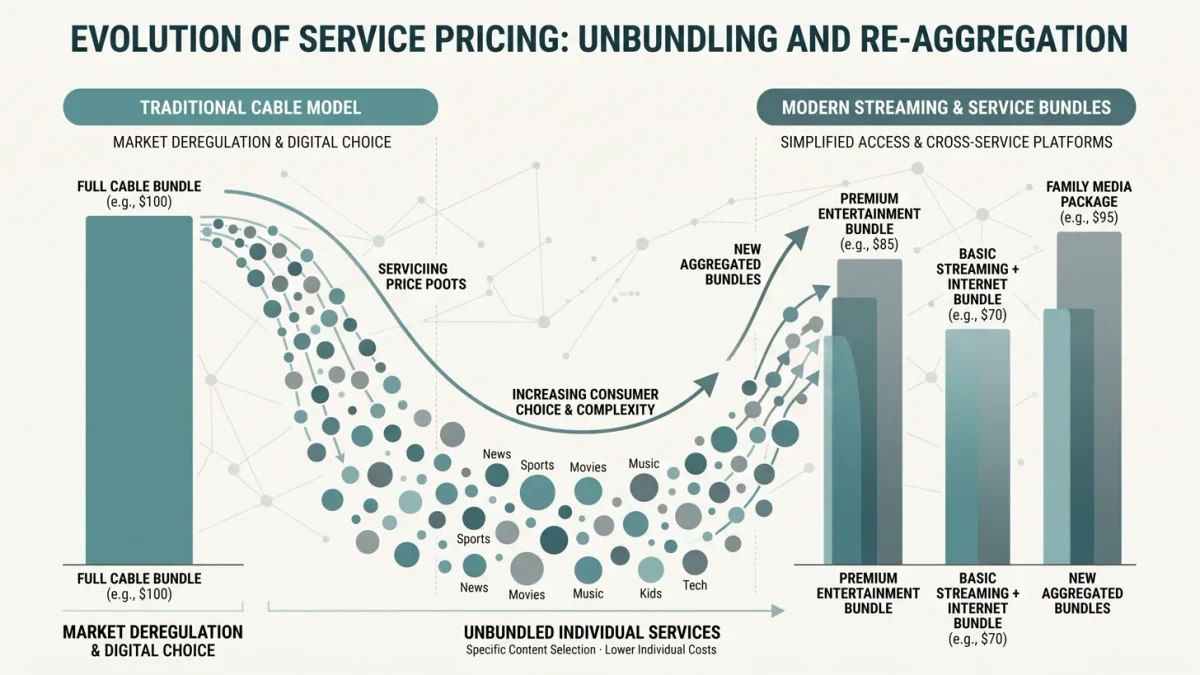
A streaming bundle is a discounted package of two or more subscription services bought as one plan — the biggest example is the Disney+, Hulu, and Max bundle that Disney and Warner Bros. Discovery launched in the United States in summer 2024, priced below the sum of its parts. Bundles now sit at the center of streaming economics: they cut churn, and they let companies count revenue the way cable always did. This explainer covers what a bundle is, which major ones exist as of June 2026, and how they bill and cancel.
Pricing below is U.S. list pricing as of the dates given and subject to change; each bundle's own order page is the source of record.
What Exactly Counts as a Streaming Bundle?
Three structures get sold under the name. First, single-company packages: Disney's own bundles of Disney+, Hulu, and ESPN+, offered since 2020, mixing ad and ad-free tiers in combinations. Second, cross-company bundles: the Disney+–Hulu–Max bundle announced in May 2024 and launched that summer, the first time two rival media companies packaged their flagship streamers together. Third, carrier and retail bundles: streaming included with another bill — Verizon's myPlan perks, Walmart+ including Paramount+, and the long-standing pattern of Amazon Prime Video riding on Prime membership. The common mechanics: one discounted price, centralized or linked billing, and separate apps that still require individual accounts.
Why Did Streaming Companies Start Bundling?
Because churn is the industry's core cost, and bundles reduce it. Subscribers with one service cancel freely; subscribers with three under one bill cancel less, a pattern cable established over decades and Reuters and Bloomberg business coverage documented in streaming from 2023 onward. Bundling also raises average revenue per household, makes advertising inventory more valuable across combined platforms, and gives companies a way to raise effective prices while advertising a discount. Disney reported the majority of its U.S. subscribers on bundle or multi-product plans in its earnings disclosures of the mid-2020s. For viewers, the honest summary is that a bundle is a retention device that can also be a genuine discount.
Which Major Bundles Existed as of June 2026?
The main U.S. options, with the caveat that lineups and prices change quarterly. The Disney+–Hulu–Max bundle, in ad-supported and ad-free versions, with and without ESPN depending on configuration. Disney's Disney+–Hulu–ESPN+ bundles, the original 2020 trio, in many tier combinations. The Disney+–Hulu duo, for households that skip sports. Carrier bundles: Verizon myPlan streaming perks including ad tiers of Max and other services; T-Mobile offers including Netflix, continuing the Magenta promotion structure in place since 2017. Retail bundles: Walmart+ with Paramount+, and Prime Video within Amazon Prime. Live-TV services like YouTube TV have long bundled many channels and add-ons and are effectively bundles of a different kind.
How Much Do Bundles Actually Save?
The savings are real but narrower than the marketing suggests, and they move whenever any component raises its price. At the Disney+–Hulu–Max bundle's summer 2024 launch, its ad-supported tier listed at $16.99 per month against roughly $26 buying the three ad plans separately — about a third off, per the companies' launch announcements. But component price increases in 2025 and 2026 narrowed or changed that gap, and the ad-free versions save proportionally less. The method that holds over time: total the individual plans you would actually pay for, then compare the bundle's current list price on the order page. If you would not subscribe to one component at all, the bundle can cost more than à la carte.
How Does Billing Work Across Different Companies?
This is where bundles get practical. In same-company bundles (Disney's), billing is centralized on one account. In the Disney–Max cross-company bundle, Disney manages the subscription and each service links to its own app with its own login; subscribers existing on both services separately need to reconcile accounts during signup, a step the bundle's help pages walk through. Carrier bundles bill through the carrier — the perk appears on your Verizon or T-Mobile bill, and the carrier's terms, not the streamer's, control what happens when you switch carriers. Keep track of which company bills you, because that determines where cancellation lives.
What Happens When You Cancel a Bundle?
Typically the components drop together, or you convert to one service at its standard price. Canceling a Disney+–Hulu–Max bundle ends the discounted access to all three at the end of the billing period; the same is true of Disney's internal bundles. Carrier perks unlink when the perk is removed from the plan. Refund handling varies by billing company. The practical check before canceling: download your watchlists, note which service holds your profiles' recommendations, and confirm the last billed date — bundle cancellations processed mid-cycle generally run to the period's end rather than refunding pro rata.
Is a Bundle Right for Your Household?
Run the numbers with three questions. Which components would you pay full price for anyway? Two of three at full price usually makes the bundle cheaper. Which tier do you need — will the ad-supported bundle tier's commercials and quality caps matter? And who bills you, and does that billing survive any planned carrier switch? Households that rotate subscriptions — subscribe, binge, cancel — generally lose money on bundles, since the whole point of a bundle is that you keep paying. Households that hold several services year-round are the model the discount was designed for.