Box office figures are the gross dollar value of movie tickets sold, collected nightly from theaters and aggregated into industry totals by measurement firms such as Comscore, which has compiled the US market's canonical weekend numbers since the late 1980s. Domestic means the United States and Canada together, international means everywhere else, and worldwide is the sum — a vocabulary worth decoding before comparing any two films. A headline like the roughly $1.44 billion worldwide gross of Barbie in 2023, per Comscore data reported at the time, tells you ticket dollars, not how many people bought them.
Who counts the money, and how?
Theaters report ticket sales — by film, by location, by day — through ticketing systems and industry data services, and Comscore aggregates them into estimates released each weekend, later finalized against actual receipts. Weekend results run Friday through Sunday, with holidays adding a fourth day to some comparisons, which is why a Monday holiday can distort week-to-week comparisons. Not every dollar is counted at the same speed everywhere: international reporting depends on local distributors and third-party researchers, and territories report at different paces, which is why global totals firm up over days and sometimes weeks. The numbers in Sunday headlines are estimates; the numbers in the historical record are verified actuals.
What do domestic and international actually cover?
Domestic is a fixed industry term for the US and Canada, treated as one releasing region because films open there under shared dates and pricing structures. International covers the rest of the world, including markets as different as China — where only a limited number of foreign films are released annually under quota rules, and studios receive a smaller share of ticket revenue than they do at home. That is why a film can post a large international total and still matter more to its studio through domestic performance: the studio's share of each ticket varies widely by market and by deal. A film's worldwide total, like Avatar's roughly $2.9 billion across its releases, per Box Office Mojo's Comscore-based records, combines all of these under one headline number.
Why isn't gross the same as tickets sold?
Because dollars inflate and prices vary. Gross tells you revenue, not admissions, and ticket prices differ sharply by market, by year, and by format: a premium-format screening can cost several times a standard matinee, so the same dollars can mean very different audience sizes. Comparisons over time are usually inflation-adjusted to mean anything: adjusted for inflation, Gone with the Wind remains the biggest domestic film ever by most reckonings, well ahead of modern titles, because its 1939 runs sold far more tickets at far lower prices. Industry summaries, like the annual US and Canadian admissions figures published by the theater owners' association, report ticket counts separately from gross for exactly this reason. When a studio touts a film as the biggest opening of its kind, the honest question is biggest by what measure — raw dollars, inflation-adjusted dollars, or tickets.
How much of the gross does the studio keep?
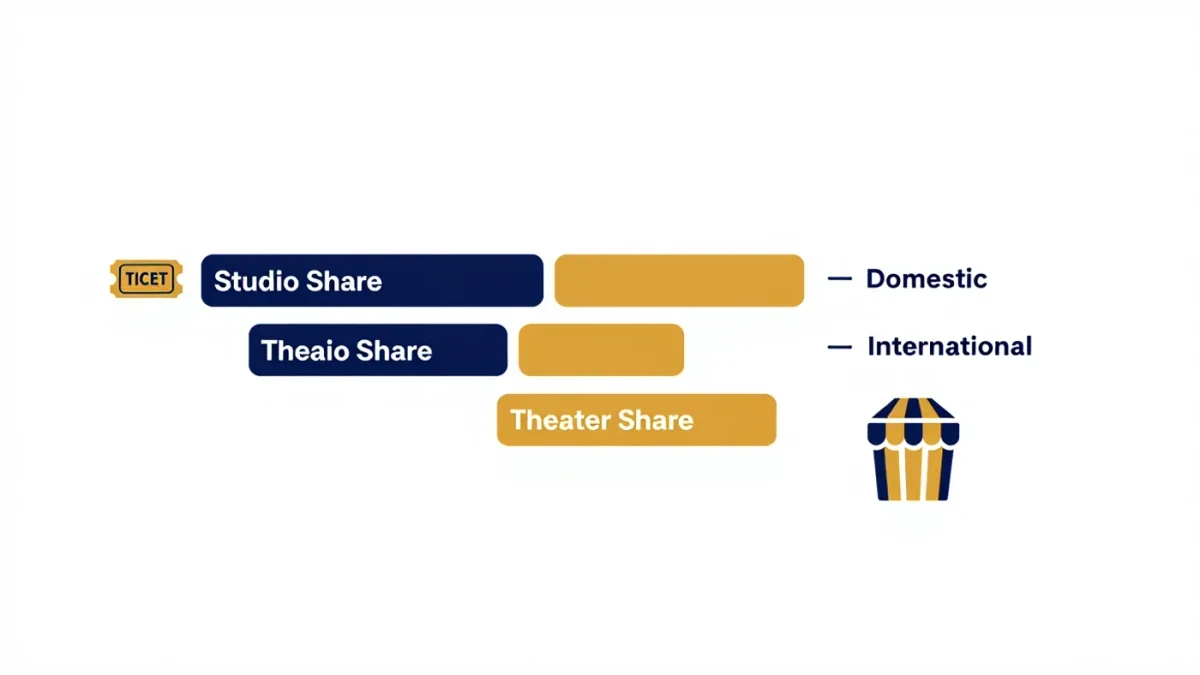
Roughly half, on average, domestically. Theaters keep the remainder, and the specific split varies by film, by week, and by negotiating power: a blockbuster's opening-week split leans toward the studio, while long-running titles increasingly favor the theater. International splits are generally worse for studios, and China's share of foreign-film revenue has been reported at roughly 25 percent. This is the difference between a film being a hit at the box office and being profitable: the reported gross is the whole pie, but the studio's slice funds the budget, marketing, and distribution costs that decide whether the film ultimately made money. That is also why some films with solid grosses are treated as disappointments and some modest grosses are treated as wins — the threshold is the film's own cost base, not the chart position.
What about previews, re-releases, and IMAX premiums?
Each has a counting rule. Thursday preview grosses are folded into opening day; films with early sneak previews have to fold them into the opening weekend under agreed rules, which matters when records are claimed. Re-releases add new gross to a film's lifetime total, which is how older films climb all-time charts decades later. Premium formats count at face value, so a heavy premium-format mix raises per-screen averages without more people attending. None of this is hidden — Comscore's published data notes the conventions — but it explains why two films with identical attendance can report very different grosses, and why the industry tracks per-theater averages so closely in a film's first weekends.
How should a viewer read box office coverage?
Read it as a revenue report with known conventions, not a popularity census. Check whether a figure is domestic, international, or worldwide; whether it is an estimate or an actual; and whether any all-time claim is inflation-adjusted. Gross answers what studios and theaters earned, which is the industry's scoreboard. If the question is what people actually watched, admissions data and, increasingly, streaming engagement reports answer it better than dollars ever did.