The way movies reach viewers was rebuilt between 2010 and 2025: the standard exclusive theatrical window shrank from roughly 90 days to about 30-45, pandemic-era experiments put some films on streaming the same day as theaters, and today's norm is a hybrid cadence — a theatrical run of several weeks, then premium digital rental, then a platform. Warner Bros.' decision to release its entire 2021 slate on HBO Max day-and-date was the sharpest break. This explainer traces the shift; facts are current as of January 2026.
What Was the Traditional Theatrical Window?
For decades, the deal between studios and cinemas was stable: a film opened exclusively in theaters and stayed there for roughly 90 days before any home release, with rental windows following. The exhibitors' leverage was exclusivity — a cinema ticket was the only way to see a new film for three months. That stability began eroding in the 2010s as Netflix moved into original films and questioned the window altogether; in 2015, Netflix's Beasts of No Nation and the Imax-simulcast parity fights made the window a public negotiation. Per Reuters' industry coverage of the period, the pressure was economic: streaming services wanted day-one content, and studios wanted their streaming arms fed.
What Changed During the Pandemic?
2020 collapsed the calendar. Cinemas closed in March 2020, and experiments followed fast: Universal's Trolls World Tour went straight to premium digital rental that April and performed well enough that AMC, the largest U.S. circuit, struck a landmark deal in July 2020 shortening exclusivity to 17 days with a shared PVOD cut. Then, in December 2020, Warner Bros. announced its entire 2021 slate would debut on HBO Max simultaneously with theaters — the day-and-date era's most aggressive move, later abandoned after exhibitor and filmmaker backlash. Disney+ tested Premier Access paid streaming for Mulan and others. When cinemas reopened, the window that returned was a fraction of the old one.
What Is the Standard Release Pattern Now?
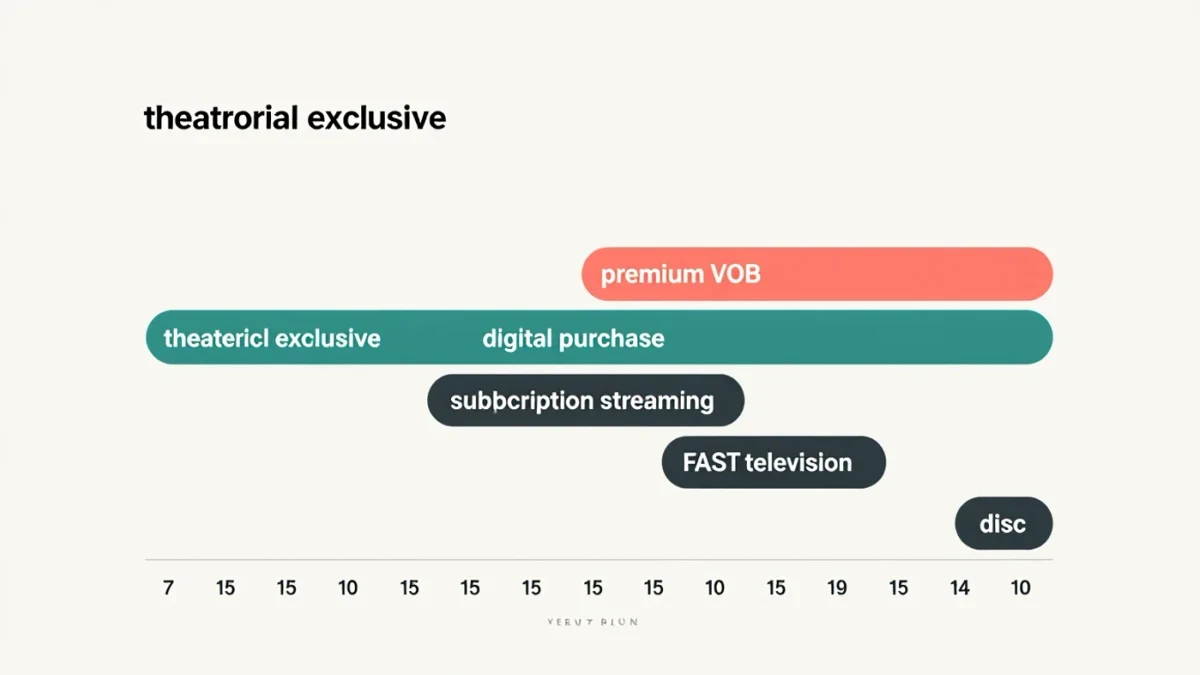
By 2023-2025, a typical wide studio release followed a compressed sequence:
- Theatrical release, exclusive for roughly 30-45 days (major tentpoles longer)
- Premium digital rental, roughly $20 for a 48-hour window
- Subscription streaming — the studio's own platform first where one exists
- Eventual rotation to third-party platforms and linear TV
Streaming-first titles still exist — Netflix in particular keeps a limited theatrical footprint designed around awards qualification rather than box office, releasing films like its 2024-2025 slate in qualify-then-stream fashion. The distinction that survives is not window length but intent: theatrical releases are built for opening weekends, streaming releases for subscriber retention.
Did Theatrical Recover After 2020?
Partially, with a changed shape. The 2023 summer demonstrated the format's continued draw — the simultaneous "Barbenheimer" phenomenon of Barbie and Oppenheimer in July 2023 drove one of the biggest combined openings on record, per AP box office coverage, and Oppenheimer went on to win seven Oscars in March 2024. But annual North American box office settled below its 2015-2019 peak, with fewer wide releases and a heavier reliance on franchises and event films; mid-budget dramas increasingly premiere on platforms directly. Reuters' box office reporting through 2024-2025 describes an industry bifurcated into event cinema and streaming-native content.
What Does the Shift Mean for Viewers?
- Shorter waits: most theatrical films reach home in about a month to six weeks, so patience is cheap.
- Fewer mid-size films in cinemas: adult dramas and comedies are more often platform premieres.
- Event films reward the theater: the titles studios hold longer are exactly the ones built for big screens.
- Rental math: premium rentals at roughly $20 suit households; solo viewers often wait for the subscription window.
- Catalog churn: platform exclusives can move as licensing deals expire — ownership questions resurface.
What Is Premium Video on Demand?
The pivot point of the whole shift is PVOD — premium video on demand, the roughly $20 48-hour rental that now sits between the theatrical window and subscription streaming. Universal pioneered the modern form in 2020, and its July 2020 agreement with AMC, which cut exclusivity to 17 days in exchange for a revenue split on digital rentals, established the template the rest of the industry copied in modified forms: theatrical exclusivity measured in weeks, then PVOD, then a platform.
PVOD changed household economics as much as studio strategy. A family of four can rent at less than the cost of four tickets and no travel; a solo viewer usually waits. Studios price accordingly — the rental window is priced for event viewing, and the discount arrives when the title reaches a subscription service, typically weeks later.
The same pipeline fed the streamers' own economics. Premium tiers, day-one releases, and exclusive windows became retention levers: a film arriving on a platform is a subscription event, measured in engagement hours rather than ticket sales. That is the quiet headline of the whole transition — the unit of success changed from a single transaction with a viewer to a recurring one, and every window decision since 2020 balances those two currencies.
Where Is the Balance Settling?
As of the 2025-2026 release calendar, studios have largely stopped fighting exhibitors over exclusivity and instead price the tiers: longer windows for tentpoles, shorter ones for riskier titles, streaming as the default for mid-budget material. Cinema operators, having survived the window compression, now negotiate terms per title. The 90-day window is not coming back; neither is day-and-date for major releases. What viewers got in the exchange is the shortest average gap between a film's cinema debut and its home availability in the home-entertainment era's history.