A celebrity memoir becomes a bestseller the same way a blockbuster becomes a blockbuster: a famous name sits on the cover, a proven team builds the product behind it, and the finished book is sold through every channel a publisher controls. The most important channel right now is audio. A star reading their own cover story into a microphone turns a book into a performance, and that performance is often what pushes a memoir onto bestseller lists.
This explainer walks through the machinery. Who actually writes these books, why the audiobook version matters so much, and why the celebrity memoir as a format has roots far older than the current boom. The short version: fame has always been a business, and the memoir is one of its most reliable products.
It helps to start with what celebrity itself is. According to Wikipedia's overview of celebrity, the term describes a condition of fame and broad public recognition created by mass media attention, and it usually implies a favorable public image rather than mere notability. A memoir is one of the cleanest ways to monetize that image, because it sells the one thing the audience already wants: more of the star, in the star's own apparent words.
Who actually writes a celebrity memoir?
Almost never the celebrity alone. The industry standard is collaboration with a professional ghostwriter or co-writer, a working writer who shapes hours of interviews into a narrative and whose name may appear in small type, in an acknowledgment, or nowhere at all. The arrangement is not a secret so much as an open convention. Readers understand that a memoir is a produced work, and publishers treat the ghost as a craft specialist, the way a studio treats a screenwriter adapting someone's life for the screen.
The ghost's job is harder than it looks. A famous person's memories arrive as anecdotes, not arcs. The writer has to find a throughline, decide what to leave out, protect the subject's relationships, and keep the voice sounding like the person on a talk-show couch rather than like a novelist. The best collaborations read as if the star sat down and wrote it; that seamlessness is the skill.
This is the same division of labor that runs through much of celebrity media. The writers behind magazine cover stories work the same way, turning access and interviews into polished narrative, a dynamic covered in our piece on the writers behind your favorite cover stories. The memoir simply extends that model to book length, with the celebrity's name doing the selling and a professional doing the sentence-making. Readers following this should also see Cover Story Celia Laskey: The Writers Behind Your Favorite Cover Stories, Explained.
Why is the audiobook version such a big deal?
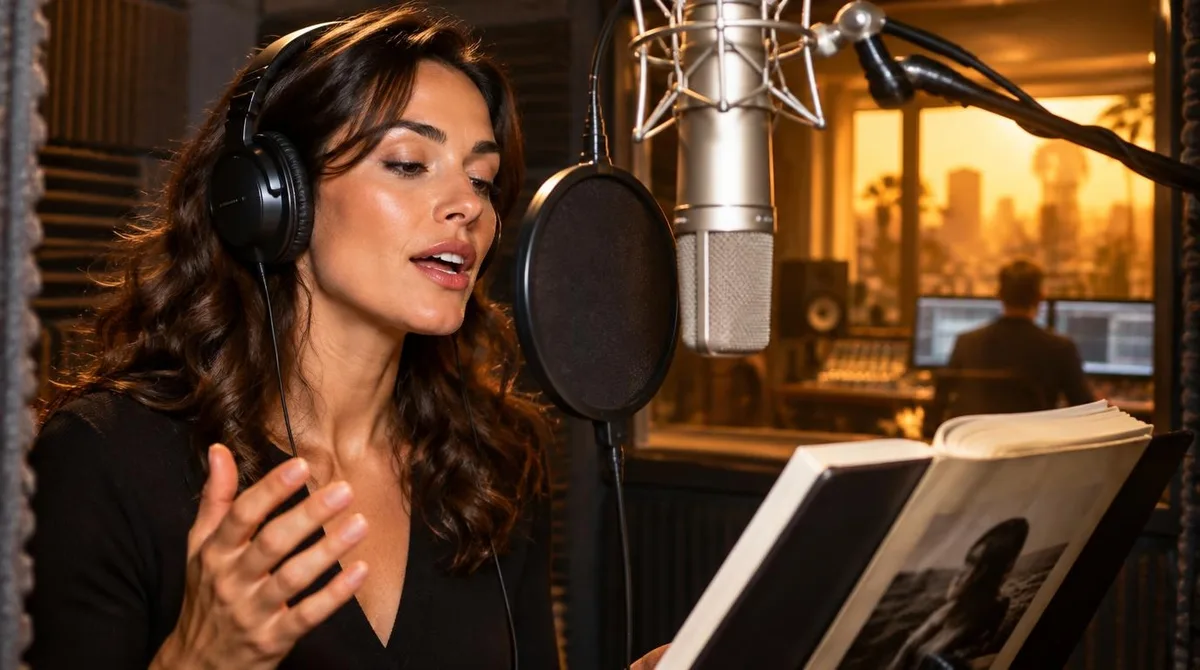
Because the memoir's core asset is the voice, and the audiobook delivers that asset directly. A print memoir offers the star's story. An audiobook narrated by the star offers the star's presence: the pauses, the laugh, the phrasing. For fans, that is closer to a concert than a reading experience, and publishers price and promote it accordingly.
The audiobook also solves a problem the print edition has. Many buyers of a celebrity memoir are not regular book buyers. They are fans of an actor, musician, or athlete who want the experience without committing to several hundred pages. Listening during a commute or a workout fits the fan's existing habits, the way streaming fits viewing habits. That is a large part of why publishers now plan the audio edition at the same time as the print one, rather than as an afterthought.
There is a craft angle too. Narration is a performance, and not every famous person is good at it. Some publishers hire a professional narrator for chapters the star does not read, or split narration between the star and a co-author. When the star narrates well, the audiobook can become the definitive version of the memoir, the one critics and fans treat as the real text.
What this means for how memoirs are made
Understanding the production model changes how a reader should weigh any claim in a memoir. These books are negotiated documents. Legal teams read them. Publicists shape them. Subjects decide which relationships, disputes, and failures make the page, and the ghostwriter's job includes keeping the book publishable. A memoir can be honest and still be selective; those are not contradictions.
Our analysis: treat a celebrity memoir the way you would treat an authorized biopic. It is a primary source about how the star wants to be understood, and a secondary source about everything else. The production history of the book, who wrote it, how long the collaboration took, whether narration was shared, is often more revealing than any single revelation inside it.
That framing also explains the market logic. A memoir is one of the few celebrity products where the star's direct participation is the product itself. Endorsements rent a famous face, a dynamic examined in the business of celebrity endorsements. A memoir sells the famous life, narrated by its owner, which is why publishers keep commissioning them even as attention fragments across platforms.
Is the celebrity memoir actually new?
No, and the history is longer than most readers assume. Celebrity culture predates Hollywood by centuries. According to Wikipedia's history of the concept, Lord Byron became a celebrity in 1812 after the first two cantos of Childe Harold's Pilgrimage appeared, declaring that he awoke one morning and found himself famous. The Romantic poets, whose livelihoods depended on their reputations, were effectively the first modern famous-for-being-famous figures.
Charles Dickens pushed it further. Wikipedia notes that scholars have called Dickens the first writer to feel the pressure of being both artist and object of unrelenting public interest, and his public readings drew crowds so intense that people sometimes fainted, reactions compared to those at a contemporary pop show. A famous author monetizing his own persona in front of a paying audience is, structurally, an early memoir tour without the book.
The commercial playbook is old too. Lillie Langtry became the first celebrity to endorse a commercial product when she fronted Pears Soap in the 1880s, per the same source. Once fame could sell soap, it was only a matter of scale and media before fame could sell its own life story. The twentieth century's film stars, whose studios initially withheld performers' names fearing salary demands, eventually became the memoir industry's core inventory. This connects to our earlier piece, Film Ratings System — How Film Ratings Work: MPAA, Content Descriptors, and Why They Matter.
Why do memoirs keep hitting bestseller lists now?
Several forces converge. First, supply: there are more famous people with direct fan relationships than ever, thanks to social media, and each is a potential author. Second, the audiobook channel, which converts fan attention into book sales without requiring a reading habit. Third, the news cycle: a well-placed revelation or reconciliation turns a memoir into entertainment news for a week, and every headline is an advertisement.
The economics favor the format. A publisher's main cost, the advance to the celebrity, buys instant name recognition that no marketing budget could. The ghostwriter, the audio production, and the publicity campaign are comparatively predictable expenses against a known audience. It is a lower-variance bet than most fiction, which is why lists fill with famous names.
For viewers and readers deciding what to consume, the practical read is simple. A celebrity memoir is worth your time when the collaboration is strong and the narration is genuinely the star's. Check who is credited as co-writer, check who narrates the audio edition, and read the reception with the same attribution discipline you would apply to film coverage: critics' views are named critics' views, never a house verdict. Our reviews section applies that standard to screens; the same habit works on the page.
The takeaway
The celebrity memoir bestseller is not an accident of taste. It is the current peak of a very old structure: fame built by media, monetized through products, and packaged by professionals. The ghostwriter supplies the craft, the audiobook supplies the voice, and the cover supplies the name that does the selling. What remains unknown in any given case is how much of the life between the covers survived the negotiation, and that is the question a careful reader keeps open.