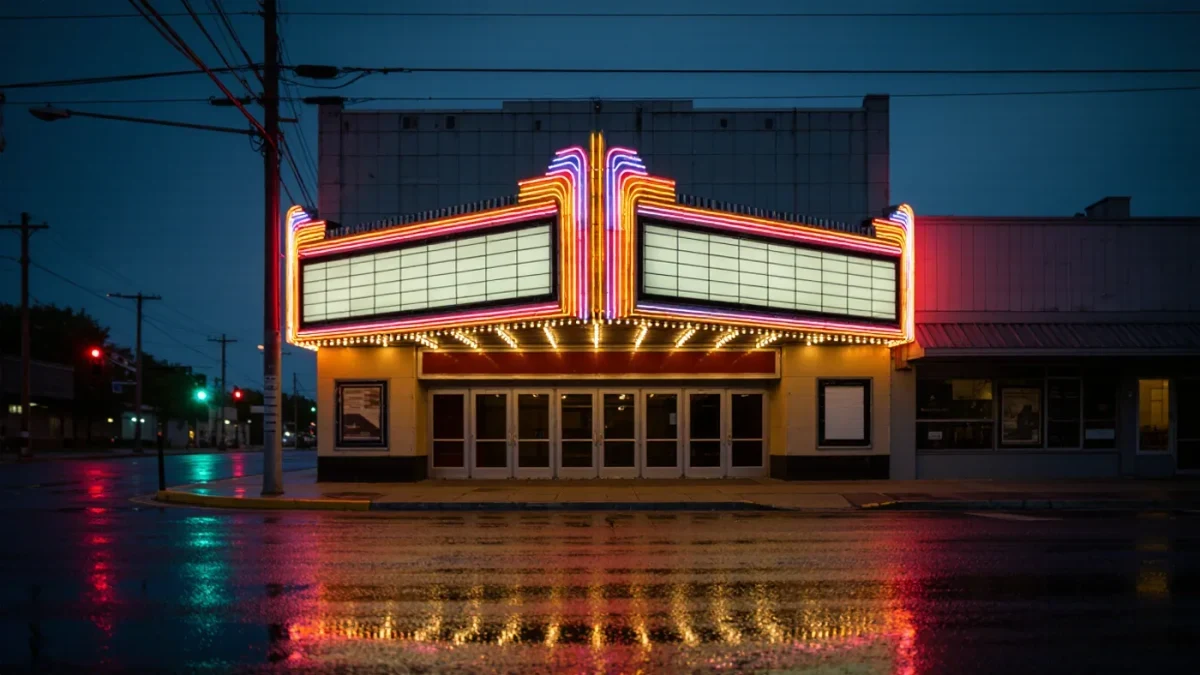
A revival house is a movie theater that programs older films rather than, or alongside, new releases — typically on real 35mm or 70mm film, in double features, and around curated themes. The United States has several dozen today, from Film Forum in New York to the New Beverly Cinema in Los Angeles, and they matter to film culture out of proportion to their ticket sales: restorations, repertory canon-building, and director education all run through them. The model predates home video by decades and has outlived several formats that were supposed to kill it.
This is a culture primer based on the public record of the theaters, their programmers, and film preservation institutions.
Where Did Revival Theaters Come From?
Repertory programming is as old as cinema's second decade. In the 1920s and 1930s, small theaters survived the Depression partly by rerunning older titles cheaply. The modern revival house took shape in the 1950s and 1960s, when television took first-run audiences away and some theaters answered with older films: the Brattle Theatre in Cambridge, Massachusetts built its long-running Casablanca tradition in this era, and New York's Thalia and Los Angeles's Vagabond became destinations for foreign and classic cinema. The 1960s art-house wave — and film societies on campuses — turned revivals into the way a generation of filmmakers, including several New Hollywood directors, caught up on world cinema they had missed.
What Makes a Theater a Revival House Rather Than a Regular Cinema?
Three practical markers. First, the calendar: new titles arrive weekly or in series built around a director, genre, studio, or anniversary, instead of a single current lineup. Second, the format: many revival houses still project 35mm and 70mm prints, which requires projectionists, print handling, and relationships with studios' film exchanges and archives. Third, the framing: introductions, Q&As, printed program notes, and double bills designed as arguments — the New Beverly in Los Angeles, bought by Quentin Tarantino in 2007 and programmed with his involvement, is famous for pairings chosen to make you see each film differently. Alamo Drafthouse, founded in Austin in 1997, scaled a version of this model nationally with repertory series alongside new releases.
Why Does 35mm Projection Matter to These Theaters?
Because prints are the thing being preserved. A 35mm print is a physical object with its own history — dye fading, splices, generation loss — and projecting it is how archives and studios find out which prints still exist and what condition they are in. The Film Foundation, the preservation organization founded by Martin Scorsese and other filmmakers in 1990, has argued that theatrical exhibition keeps restoration economically alive; studios restore titles for anniversaries and anniversary re-releases are booked through revival houses first. The Library of Congress and other archives fund preservation, but the exhibition side — audiences paying to see a restored print — is what repertory theaters contribute.
Which Revival Houses Shape the Conversation Now?
A short map of the names that recur in coverage. In New York: Film Forum, programming repertory since 1970 as an independent nonprofit, and the Metrograph, opened on the Lower East Side in 2016, which also runs its own distribution label for restorations. In Los Angeles: the New Beverly and the American Cinematheque's Egyptian and Aero theaters. In Washington, D.C.: the AFI Silver, restored and reopened in 2003. In Austin and beyond: Alamo Drafthouse's repertory programming. In Chicago: the Music Box Theatre, running since 1929. Each has a specialty the others do not — Music Box's 70mm festival, AFI Silver's wide-screen series, Metrograph's deep-catalog curations — and programmers at these venues are quoted in studio restoration announcements regularly.
How Do Revival Houses Get Their Films?
Through a licensing system that predates streaming. Studios and rights holders control repertory titles; theaters book them for fixed runs at flat fees or percentage splits, and the prints — or DCPs, the hard drives of digital cinema — ship from exchanges. Famous titles can be booked in a phone call; obscure ones require detective work, since rights fragment when libraries sell and distributors close. The revival houses with deep studio relationships get the anniversary restorations; the ones with archive relationships get the rarely screened prints. programmers describe the calendar as a negotiation between what is available, what is affordable, and what the audience will trust them on.
Did Streaming Kill the Revival House?
The record says no, with caveats. Streaming made thousands of titles available at home, which ended the revival house's old role as the only place to see an old film. What survived is the part streaming cannot supply: the print, the crowd, the curation, and the shared opening-weekend energy of a restoration. programmers and distributors have reported since the late 2010s that repertory attendance skews younger than expected — a generation raised on algorithms discovering that a calendar chosen by a person is its own pleasure. The pandemic closures of 2020–2021 hit these theaters hard, and several closed permanently, but the ones that reopened, including Film Forum and the Music Box, reported strong repertory attendance in the years after.
How Can You Find and Support One?
Practical steps. Search the theater's own calendar rather than aggregator apps, since repertory bookings often do not flow into listings services. Membership and donation models fund most of the nonprofit houses — Film Forum and American Cinematheque run on them. Buy tickets to the obscure title, not just the famous one, because a curator's ability to keep booking deep catalog depends on those numbers. And if a theater advertises a 70mm or rare-print screening, go to that one: prints travel limited engagements, and the screening may not be repeated.