AVOD stands for ad-supported video on demand: streaming services that let you watch films and shows free, with the bill paid by advertisers instead of subscribers. Tubi, Pluto TV, The Roku Channel, and Samsung TV Plus are the biggest U.S. examples, and the category keeps growing — Fox said in 2025 that Tubi had passed 100 million monthly active users. This explainer covers how AVOD works, how it differs from FAST and from Netflix-style SVOD, and what the trade-offs are for viewers.
How does a streaming service stay free?
The economics are the same as broadcast television, moved onto an app. The service licenses or acquires a library, inserts ad breaks into the programming, and sells those breaks to advertisers; your attention is the product being sold. Because ad revenue scales with watch time, AVOD platforms favor volume — deep catalogues of older films, reality series, and licensed international programming — over expensive originals. That is why a free service's library looks different from a paid one: fewer prestige exclusives, more volume, and rotating rights windows that shift monthly.
What is the difference between AVOD and FAST?
The two terms get used together but describe different things:
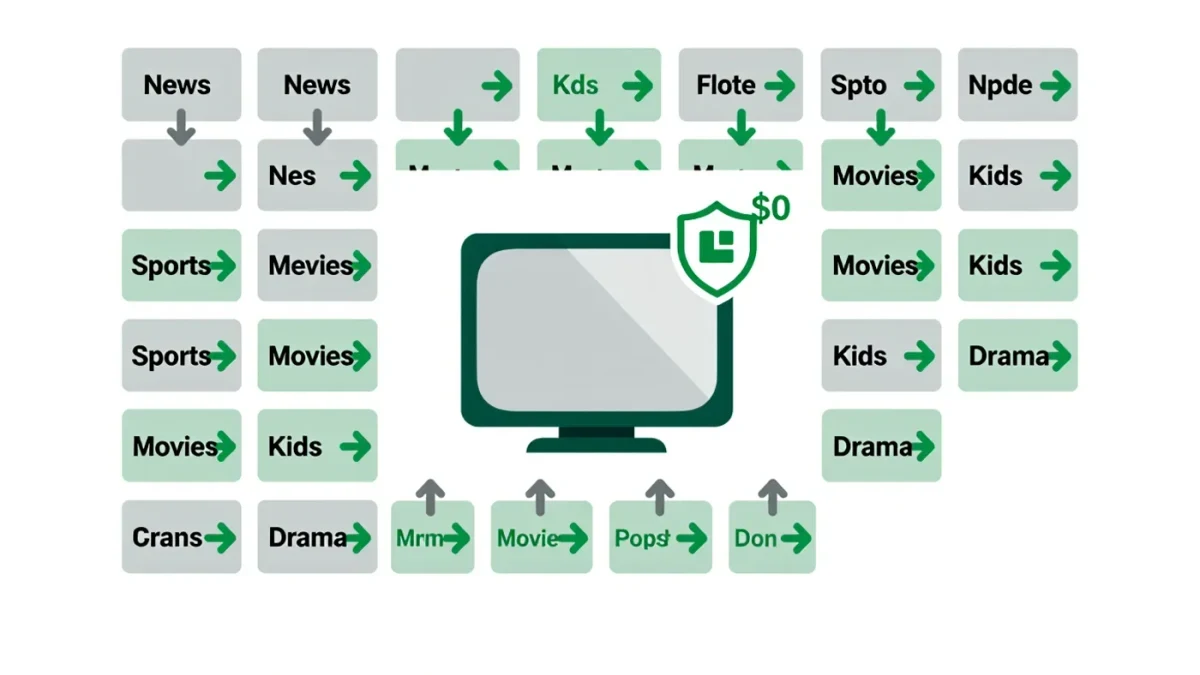
- AVOD is on demand: you pick a title from a catalogue — a movie on Tubi, a series on The Roku Channel — and it plays with ad breaks, when you choose.
- FAST — free ad-supported streaming television — is linear: always-on channels that run continuous programmed schedules, like Pluto TV's hundreds of virtual channels. You tune in mid-program the way you would to cable.
Most free services blend both: Tubi and The Roku Channel carry FAST-style channels alongside their on-demand shelves, while Pluto TV began as pure FAST and added on-demand sections. When a platform says free, the fine print is always the same: ads, and a somewhat thinner library than a paid subscription.
Which are the major free ad-supported services?
As of February 2026, the main U.S. players and their corporate parents:
| Service | Parent company | Model | Notes |
|---|---|---|---|
| Tubi | Fox Corporation | AVOD + FAST channels | Largest U.S. AVOD audience; streamed Super Bowl LIX free in February 2025 |
| Pluto TV | Paramount | FAST-first + on demand | Hundreds of linear-style channels |
| The Roku Channel | Roku | AVOD + FAST | Bundled on Roku devices and apps elsewhere |
| Samsung TV Plus | Samsung | FAST-first | Pre-installed on Samsung TVs |
| Plex, Crackle, others | Various | Mixed | Smaller catalogues; Plex adds free live TV to its media-server app |
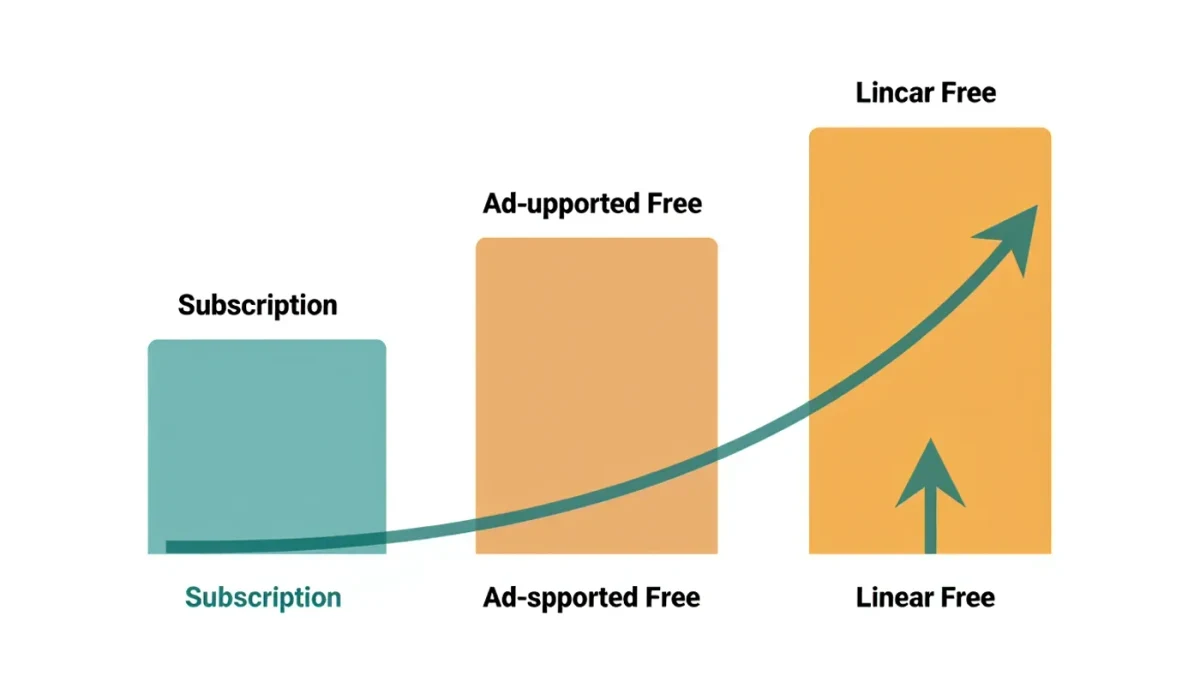
Amazon folded its Freevee brand into Prime Video's free ad-supported section in 2024, which is the clearest recent signal of where the category sits: free tiers are now a standard part of every major streamer's ladder rather than a fringe experiment. Availability and lineups change; confirm on each platform's own pages.
What do you give up compared with a paid subscription?
Three things, mainly. First, ads — typically a few minutes per hour, unskippable, though usually lighter than cable. Second, control over the catalogue: AVOD libraries live on short licensing windows, so titles appear and vanish without the permanence a download-to-own purchase gives you. Third, playback quality and features: some free tiers cap resolution — Tubi has expanded into 4K on select content, but much of the free catalogue streams in standard HD or below — and offline downloads are generally not offered. None of these are hidden costs; they are the visible price of free.
Why did AVOD take off in the 2020s?
Two forces converged. Subscription fatigue set in as households juggled a half-dozen paid services, pushing viewers toward free alternatives; and the 2022–2023 advertising downturn made ad-supported tiers respectable across the industry, with Netflix and Disney both launching cheaper ad plans in late 2022. The proof point for scale came on February 9, 2025, when Fox streamed Super Bowl LIX on Tubi free of charge, as Reuters reported at the time — putting the biggest television audience of the year behind an AVOD storefront. By 2025, measurement firms were reporting that free services accounted for a steadily rising share of total U.S. streaming time, led by Tubi's growth with younger audiences.
Is AVOD worth adding to your setup?
For viewers who watch older films, comfort reality shows, or international series, a free service costs nothing to try and no cancellation is ever needed — uninstalling is the whole process. For viewers chasing new theatrical releases or prestige originals, the free shelf will disappoint, and a paid tier or rental remains the route. The practical answer for most households in 2026 is hybrid: keep one or two paid subscriptions for exclusives, run Tubi or Pluto TV for the deep catalogue, and rent the occasional new release à la carte. That mix is exactly what the ad-supported model was built to slot into.