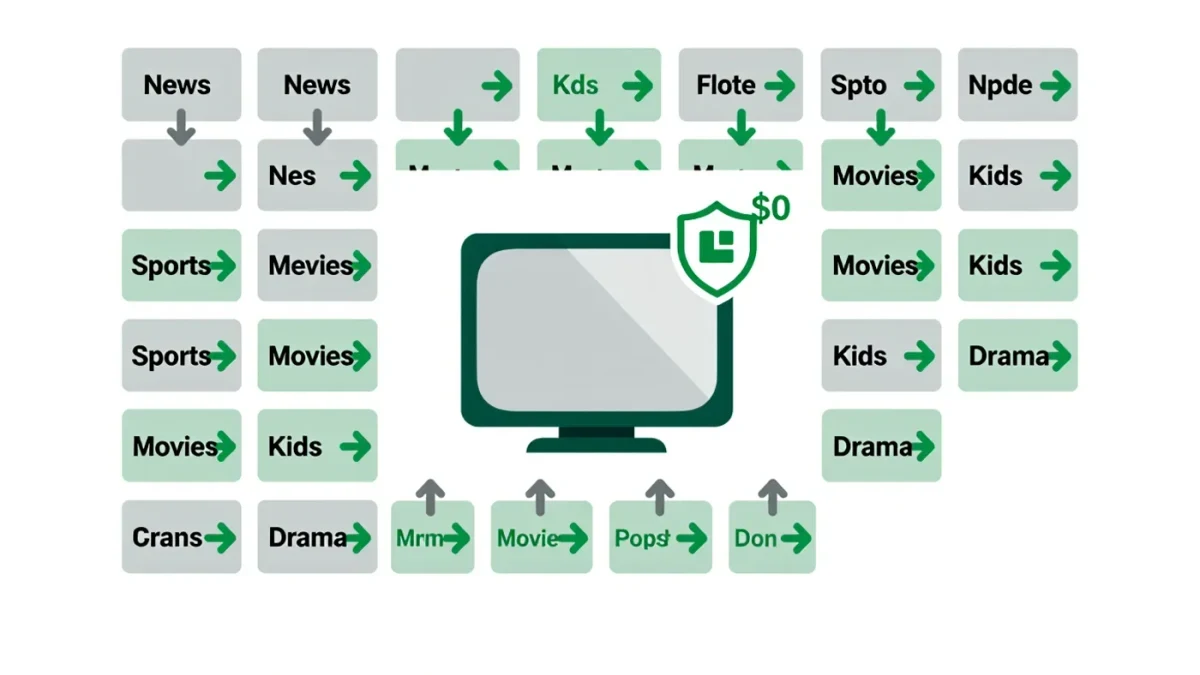
FAST stands for free ad-supported streaming television: linear channels that play continuously like broadcast TV, delivered over the internet, free to watch, and paid for by advertising. The best-known free services carrying them include Tubi, Pluto TV, The Roku Channel, Samsung TV Plus, and Amazon's Freevee lineup (folded into Prime Video's free tier in 2024), and by mid-decade FAST accounted for a visible slice of US television viewing — Nielsen's Gauge report has shown free streaming categories growing steadily since measurement began in 2021, per Nielsen's public releases. You do not subscribe, and you do not pay per title; you watch a schedule with ads, the way cable worked, minus the bill.
How is FAST different from regular streaming and AVOD?
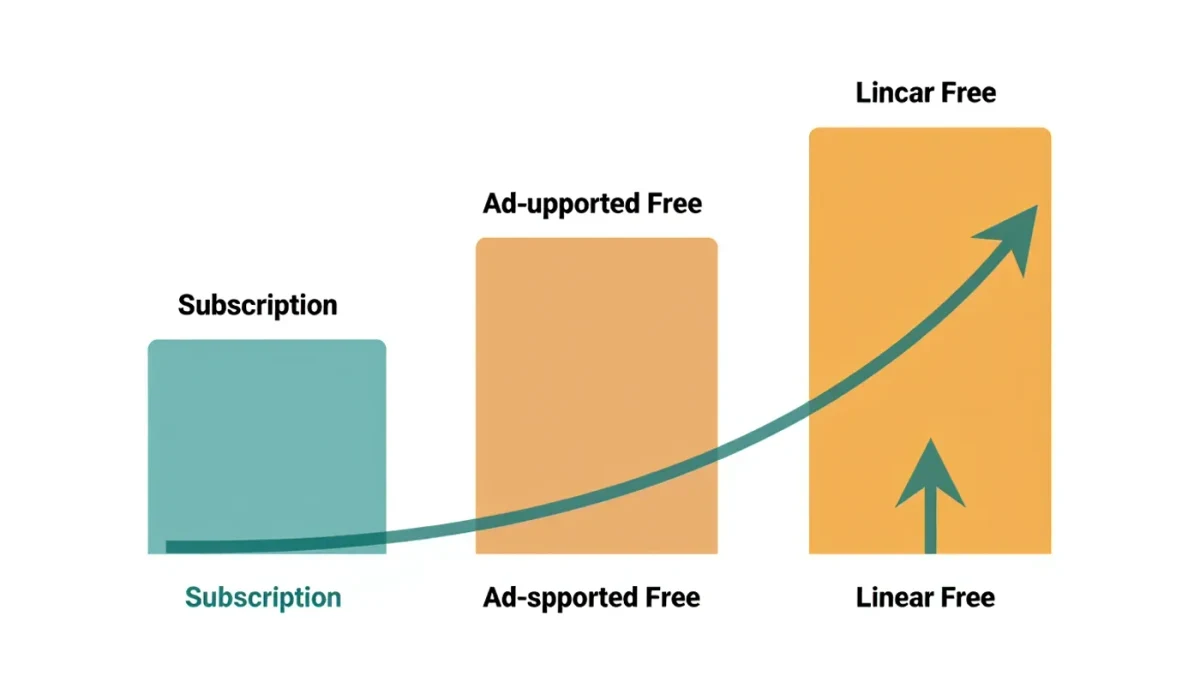
The industry separates on-demand from linear. Subscription video on demand (SVOD) is Netflix-style: a monthly fee, a catalog, you choose everything. AVOD — ad-supported video on demand — is the same shape but free with ads, like much of Tubi or the free tier of Peacock. FAST is the third mode: channels with names and schedules that run whether you are watching or not, often single-topic — one channel for one classic sitcom, one for a genre like westerns or true crime. Most free services mix both modes, which is why Tubi can be described simultaneously as an AVOD library and a FAST platform. The distinction that matters to a viewer: on-demand means you pick; FAST means the channel is already playing.
Who operates FAST channels, and how do they make money?
Three kinds of companies run them. Device and platform owners — Samsung, LG, Roku, Amazon — embed free channels into their TVs and streaming devices because ad revenue adds income to hardware. Dedicated free services — Tubi (owned by Fox), Pluto TV (owned by Paramount) — build their channel grids as their whole product. And content owners, from studios to individual franchises, program their own channels from their libraries, earning ad revenue from catalogs that otherwise sit unmonetized. Advertising is sold against your attention, targeted by the platform the way web ads are; the trade is the same one broadcast television always offered, executed with internet measurement. For viewers, the direct cost is zero dollars and exposure to a heavier ad load than most paid tiers.
What kind of movies and shows are on FAST channels?
Largely library content: older films, classic series, reality back-catalogs, and documentaries, plus a growing share of originals made cheaply for the format. The film selection skews to titles past their premium windows — which is what makes FAST genuinely useful to a movie watcher. A 1990s thriller, a spaghetti western marathon, or a director's early films that never landed on any subscription service routinely surface on FAST grids, and licensing rotates constantly, so availability changes without notice. Niche depth is the format's strength: genre channels for horror, martial arts, game shows, and court TV sustain catalogs too small for a major service to promote but large enough to fill a linear channel for years.
How do you watch FAST channels?
Through the same hardware you already use. Smart TVs from Samsung and LG carry free channels in their built-in guides; Roku devices and Amazon Fire TV devices surface The Roku Channel and Freevee-style channels at the top level; game consoles and mobile apps carry the standalone services such as Pluto TV and Tubi. No account is required on many platforms, though creating one enables watchlists and resume-points across devices. Region matters: FAST availability differs by country, and a channel lineup in the United States is not the lineup elsewhere. As with everything streaming, check the service's own current channel list, because grids change monthly.
Is FAST worth using alongside paid subscriptions?
For library film viewing, the honest answer is that it fills a gap the paid tier leaves. If a title you want is on a service you already pay for, that copy is usually higher-quality and ad-free on the paid tier. If it is not, FAST is the most likely free place it exists legally, and the price of finding out is one search in a free app rather than a subscription cycle. The practical approach is to treat FAST as a supplement: search the free services before renting or subscribing, and expect the catalog to be deeper in older titles than in anything recent. Availability, as always, is subject to change.