The Oscar diversity standards — formally the Academy's Representation and Inclusion Standards — were adopted in September 2020 and became a Best Picture eligibility requirement beginning with the 96th Academy Awards in 2024. They set four categories of inclusion benchmarks, and a submitting film must satisfy at least two of the four to compete for the top prize. As of July 14, 2026, they remain in force. The rules apply only to Best Picture; every other category is unaffected.
Red Orb News publishes sourced information, not opinions on the merits of the policy. The description below follows the Academy's published standards, and reactions are attributed to the outlets and organizations that stated them.
What Are the Four Standards a Best Picture Entrant Must Meet?
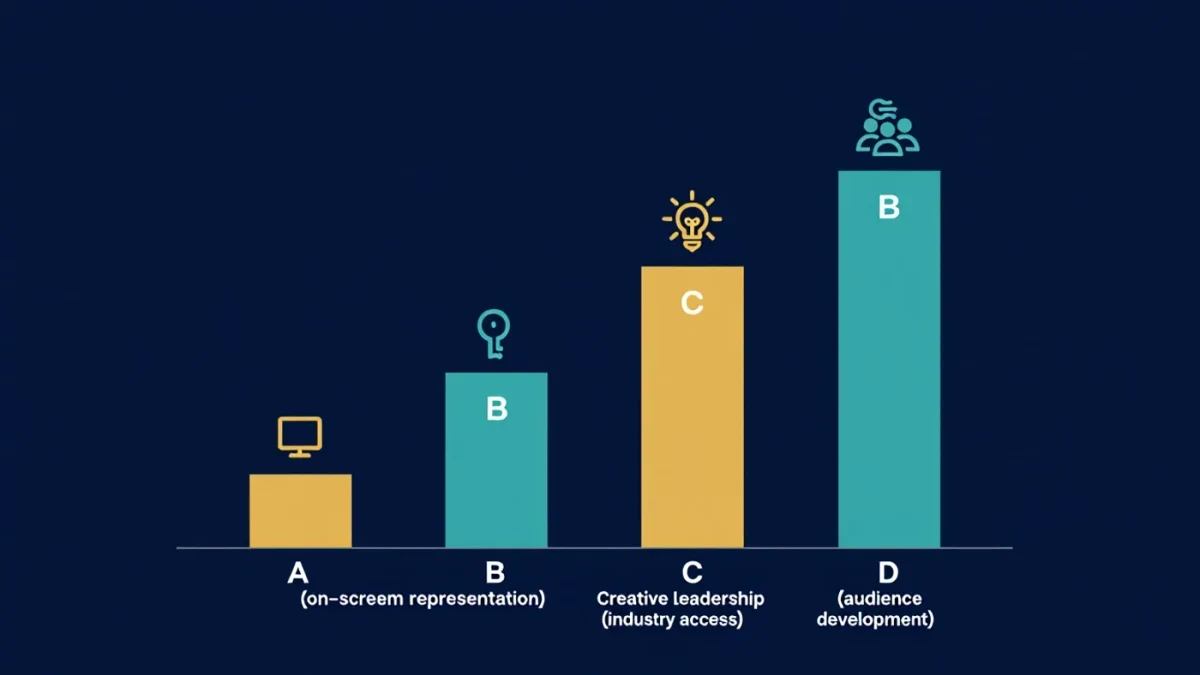
The Academy's framework, often abbreviated RAISE, divides into four standards labeled A through D. Standard A concerns on-screen representation: the film includes a lead or significant supporting actor from an underrepresented racial or ethnic group, or at least 30 percent of secondary roles come from at least two underrepresented groups, or the main storyline centers on an underrepresented group. Standard B covers creative leadership and department heads: a set percentage of key crew positions held by members of underrepresented groups, or the composition of the film's marketing or distribution team. Standard C addresses industry access and opportunity: paid apprenticeship or skill-development opportunities for underrepresented groups on the production. Standard D concerns audience development: the distributor or studio has employed executives from underrepresented groups on the release. Meeting any two of the four satisfies the requirement.
Which Films Do the Standards Apply To?
Only films submitted for Best Picture consideration. The requirement took effect for the 96th Oscars ceremony in March 2024, covering films released in 2023, following a transition period the Academy set when it announced the standards in 2020 as part of its inclusion initiative known as Aperture 2025. Documentary Feature, International Feature, Animated Feature, and the craft categories carry no such threshold — a documentary or an international submission can compete in its own categories without reference to the standards, though a film also competing for Best Picture must meet them for that category alone.
Who Checks Whether a Film Qualifies?
Compliance runs on confidential self-reporting. Submitters complete the Academy's Representation and Inclusion Standards Entry form, sometimes called the RAISE form, documenting which standards the production satisfies, and the information is verified confidentially rather than published. That confidentiality is deliberate: the Academy has said the standards are meant to encourage inclusive hiring, not to publicize personnel data. The practical result is that outside observers cannot see which standard a given nominee used — only that the film, by entering, attested it met two of the four.
What Do the Standards Actually Require in Practice?
Less than early headlines suggested. Because films choose any two of four standards, and Standard D can be satisfied at the studio-executive level rather than on set, many productions meet the rule through channels invisible on screen. Industry reporting around the 96th and 97th Oscars found no documented case of a would-be Best Picture entrant being disqualified for failing the standards. The Academy's own framing, from its 2020 announcement, was that the standards codify practices many studios had already adopted, which is one reason trade coverage described the change as consequential mostly as a signal rather than a barrier.
How Did Hollywood React When the Rules Were Adopted?
The 2020 announcement drew a range of published reactions, and the disagreement has been preserved rather than averaged here. Reporting by BBC News and other major outlets at the time noted support from industry groups that had pushed for measurable inclusion commitments, alongside skepticism from some producers' quarters who argued that credit-based rules add paperwork without changing hiring. Writers guild and directors guild commentary in the trades debated whether the standards should eventually extend to above-the-line categories. In the years since, as trade publications have observed, the standards have mostly receded from public debate — a point both supporters and critics have made, for opposite reasons.
Do Other Awards Have Similar Requirements?
The Oscars' standards are the best-known but not the only inclusion framework in the industry. The British Film Institute's diversity standards, on which the Academy's model drew, have applied to British film funding and some BAFTA-eligible productions since 2016, and several European funding bodies use comparable criteria. In the United States, state tax-incentive programs have at times attached inclusion reporting requirements. The Academy remains the only major awards body to make inclusion a stated eligibility condition for its top prize.
Could the Standards Change Again?
They already have once in spirit: the Academy has adjusted submission paperwork and clarified definitions since 2020 without altering the two-of-four structure. The rules stand as published for the ceremonies through the period covered here, and any future revision would come through the Academy's Board of Governors, as the original adoption did in September 2020.
| Standard | Area | Example Pathways |
|---|---|---|
| A | On-screen representation | Lead actor from an underrepresented group; 30 percent of secondary roles; centered storyline |
| B | Creative leadership | Department heads, marketing, or distribution team composition |
| C | Industry access | Paid apprenticeships and skill-development opportunities |
| D | Audience development | Representation among studio and distributor executives |
A film needs two of the four rows above for Best Picture eligibility, per the Academy's published standards.