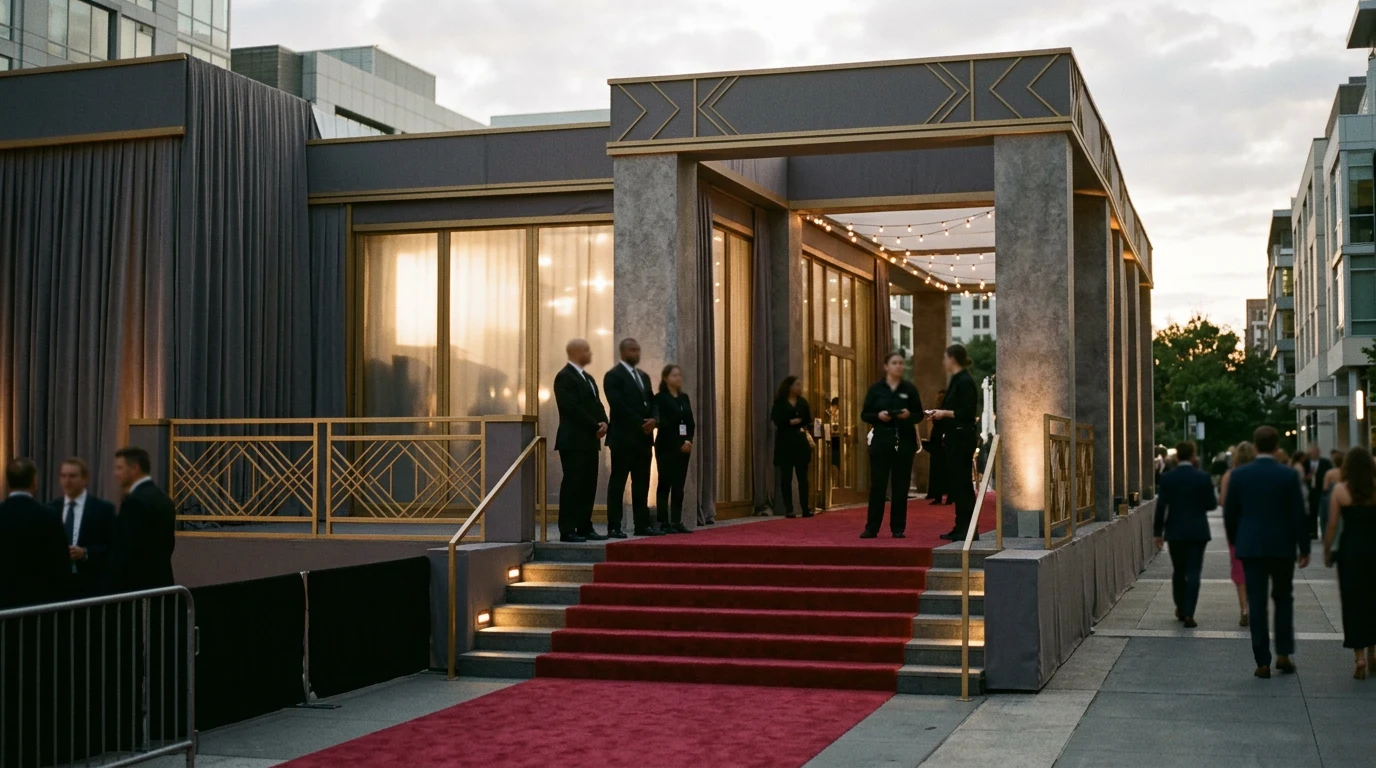
The Cannes Film Festival is a roughly two-week event held every May in Cannes, France, where a jury of filmmakers awards the Palme d'Or, the most coveted prize in international cinema. The 2025 edition, which ran May 13–24, drew films from dozens of countries and crowned Jafar Panahi's It Was Just an Accident as its winner. But Cannes is also a marketplace, a launchpad for awards campaigns, and a strict hierarchy of sections — and understanding that structure explains most of what you read about it each spring.
What are the official sections at Cannes?
The festival's core is the Official Selection, curated by the festival's artistic leadership under its president, and it splits into tiers:
- Competition — roughly 20 films competing for the Palme d'Or; entry here is the festival's headline distinction.
- Un Certain Regard — a parallel official strand for younger or more formally adventurous directors, with its own jury and prizes.
- Out of Competition and Midnight Screenings / Cannes Premières — high-profile films shown outside the prize race, from blockbusters to documentaries.
- Special Screenings — documentaries and event films invited by the selection committee.
Alongside these run two independent sections with their own juries: the Directors' Fortnight (Quinzaine des Cinéastes), run by the French Directors' Guild since 1969, and Critics' Week, run by the French critics' syndicate since 1962, which restricts entries to first and second features. The Official Selection also includes short films and the Cinéfondation strand for film-school works, each with its own prizes.
How does the jury and the Palme d'Or work?
The Competition jury is appointed fresh each year by the festival, usually chaired by a major filmmaker or performer — Juliette Binoche presided in 2025, following figures like Greta Gerwig in 2024 — and typically numbers around nine members. The jury watches the Competition slate during the festival and deliberates at its end, announcing prizes at the closing ceremony on the last Saturday. The Palme d'Or is the top award; beneath it the jury dispenses the Grand Prix (officially the second prize since 1995), jury prizes, and acting, directing, and screenplay awards — with full discretion to shape the list as it sees fit. The Palme d'Or itself dates to 1955; before and after, the top award was the Grand Prix, a naming that resumed 1964–1974 before the Palme returned permanently in 1975.
What is the Marché du Film?
Behind the red carpet runs the Marché du Film, the festival's industry market and the real economic engine of the event — one of the world's largest film markets, where thousands of registered companies buy and sell distribution rights, and thousands of films are screened for buyers in market venues apart from the official program. This is why Cannes functions simultaneously as an art-festival and a trade fair: a director's Competition premiere may be a career milestone while its producer is downstairs closing territorial deals. Most badge-holders in Cannes during the festival are market attendees, not press or gala guests — the spectacle is the smaller part of the crowd.
How does a film get into Cannes?
By invitation, largely. The selection committee, headed by the artistic director, screens submissions and scouts films throughout the year, and the overwhelming majority of slots go to films the festival actively courts — world premieres are effectively required for Competition, and selection announcements come in stages each April. Titles rejected from the Official Selection can land in the parallel sections, which program independently. For the industry, accreditation is tiered by profession, and even a market badge requires proof of professional activity. The result is a deliberately closed pyramid, which is precisely what makes selection newsworthy: being chosen is the prize before any prize.
Why do Cannes launches matter for the Oscars?
Because the calendar works. A May premiere gives a film eight months of runway — festival buzz, a summer-to-fall theatrical rollout in the U.S., and placement squarely inside the awards-voting window. The pattern is well established: Parasite won the Palme d'Or in May 2019 and the Best Picture Oscar in February 2020, and Anatomy of a Fall took the 2023 Palme before its 2024 Oscar win for original screenplay. Later Palme winners such as Triangle of Sadness (2022) and Anora, which premiered in Competition in 2024 before sweeping the 2025 Academy Awards, show the pipeline running year after year. American studios use the festival the same way, premiering prestige titles Out of Competition for the exposure.
What should a viewer take from all this?
Three practical readings. When May coverage calls a film a Palme d'Or winner, that is one jury's verdict in one year — a strong signal about world cinema, not a universal ranking. When a small film wins a parallel-section prize, it is often where the next year's discoveries come from. And when a Hollywood blockbuster shows up on the Croisette, it is marketing on the world's most photographed red carpet, unrelated to the juries. The festival runs every May; the 2026 edition follows the same structure described here, with its own juries announced by the festival in the spring.