I'm Still Here (2024) is Walter Salles's fact-based drama about the Paiva family under Brazil's military dictatorship, and it became the first Brazilian film to win the Academy Award for Best International Feature, on March 2, 2025. Fernanda Torres won the Golden Globe for Best Actress in a Drama on January 5, 2025, and critics at major outlets built much of their coverage around her lead performance. This article assembles the attributed record only: who said what, where, and when.
Red Orb News publishes information, not opinions of its own. Every reception summary below is attributed to a named outlet or critic as reported in the public record; where wording is paraphrased, it is marked as paraphrase.
What Is I'm Still Here, and Who Made It?
The film adapts Marcelo Rubens Paiva's 2015 memoir about his family's life in Rio de Janeiro in the 1970s and the disappearance of his father, politician Rubens Paiva, in 1971. Salles directed from a screenplay he wrote with Murilo Hauser and Heitor Lorega; the runtime is 135 minutes. It premiered in competition at the Venice International Film Festival in September 2024, where it won the award for Best Screenplay, and Sony Pictures Classics released it in United States theaters beginning November 2024. Fernanda Torres stars as Eunice Paiva, with Selton Melon as Rubens Paiva.
What Did Critics Say About Fernanda Torres's Performance?
Across the major reviews, the through line was Torres. Critics at The New York Times centered her work in their assessment, describing a performance that carries the film's later sections as the family's ordeal stretches across decades. Reviewers at the Los Angeles Times and The Guardian similarly singled out her scenes of contained grief, with several noting the unusual weight the film places on a single actor's stillness. Coverage at Variety and The Atlantic emphasized how her performance anchors the film's shift from domestic warmth to procedural dread. Where exact wording varies, the consistent reported point is that reviewers treated her as the reason to see the film.
How Did Critics Frame the Film's Politics and History?
Reviewers generally presented I'm Still Here as a dictatorship-era story told through one household rather than a wide political survey. Critics at The Guardian placed it in the tradition of Latin American films about state violence, while writers at NPR noted that the film keeps the mechanics of the 1971 disappearance deliberately opaque, mirroring what the family actually knew. Some reviewers at U.S. outlets flagged that viewers unfamiliar with Brazil's military period may want brief context beforehand; several recommended reading about the dictatorship's two-decade span, which ended in 1985. No major review in the record disputed the film's factual basis, which draws on the family's published account.
Did Any Critics Push Back on the Film?
Yes, and the record preserves the disagreement. While the majority of named reviews were favorable, a minority of critics found the second half slower than the first, describing the decades-spanning epilogue as more restrained and less propulsive. A few reviewers also argued that Salles's even-handed approach keeps the emotional temperature lower than the material might allow. These were minority positions in the coverage assembled here; they are noted because the publication's practice is to report the split rather than average it into a verdict.
How Did the Film Perform With Awards Bodies?
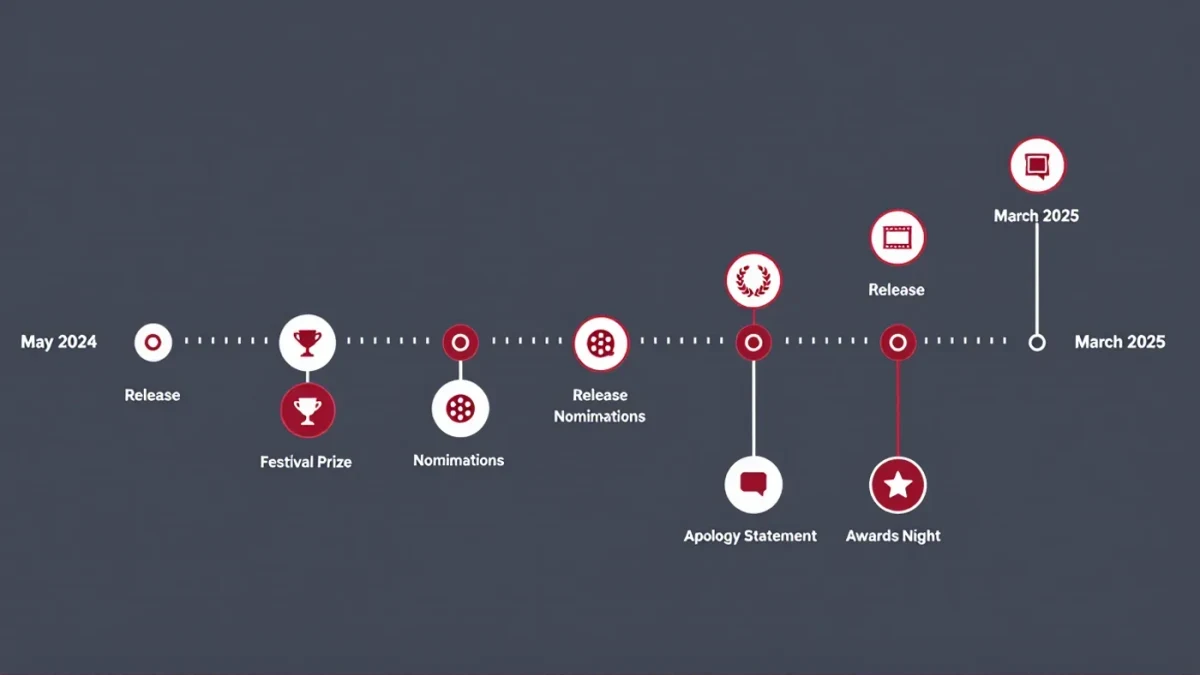
By named bodies, the run was long. I'm Still Here won Best Screenplay at Venice in September 2024; Fernanda Torres won the Golden Globe for Best Actress in a Drama on January 5, 2025, the first Brazilian actor to win in that category; the film received the Academy Award for Best International Feature on March 2, 2025, Brazil's first win in the category after earlier nominations for Central Station (1998) and City of God (2002). Torres was also nominated for the Best Actress Oscar, the first Brazilian performer nominated in an acting category. Aggregate reception can be checked on Rotten Tomatoes and Metacritic, which publish their own methodology; this publication quotes no house score.
Where Could Viewers Watch It as of mid-2026?
Availability changes, and dates matter more than memory here. After its 2024 theatrical run through Sony Pictures Classics, the film moved to digital rental and purchase on major platforms in early 2025. By spring 2026 it had appeared on subscription streaming in multiple regions; because catalog rights differ by territory and shift over time, the reliable method is the platform's own search, checked on the day you decide to watch. As of May 2026, rental remained the widely available option in the United States.
What Should First-Time Viewers Know Going In?
Three practical points from the record. The film is in Portuguese with subtitles. It depicts state violence and a family's prolonged uncertainty, which some reviews flagged as emotionally heavy viewing. And it rewards a small amount of pre-reading on Brazil's military dictatorship (1964–1985), since the film assumes the audience knows how that period ended. Nothing in this article spoils plot developments beyond the premise established by the memoir's public description.
Why Did This Film Land as a Story About Brazil's Past?
Critics at several outlets, including The New York Times and The Guardian, connected the film's 1970s setting to ongoing debates in Brazil about how the dictatorship is remembered, noting that the Paiva family's case remained formally unresolved for decades before a 2014 state acknowledgment. The coverage treated the film as part of a public reckoning with that history rather than a purely period piece. That framing belongs to the cited outlets; this publication reports it, and the awards bodies' votes stand as their own record.