Subtitled international films grew their audiences through a documented chain of events: Parasite's Best Picture win at the Academy Awards on February 9, 2020 — the first non-English-language film ever to take the top prize — followed by pandemic-era streaming, and then Squid Game's record-breaking run on Netflix beginning in September 2021, which the platform reported as its most-watched series launch at the time. Netflix's own engagement data has since put non-English titles at roughly a third of all viewing on the service, per the company's December 2023 engagement report covering the first half of that year. The one-inch barrier of subtitles, as Parasite's director Bong Joon Ho put it in his Golden Globes acceptance speech in January 2020, turned out to be thinner than the industry believed.
What changed at the awards shows?
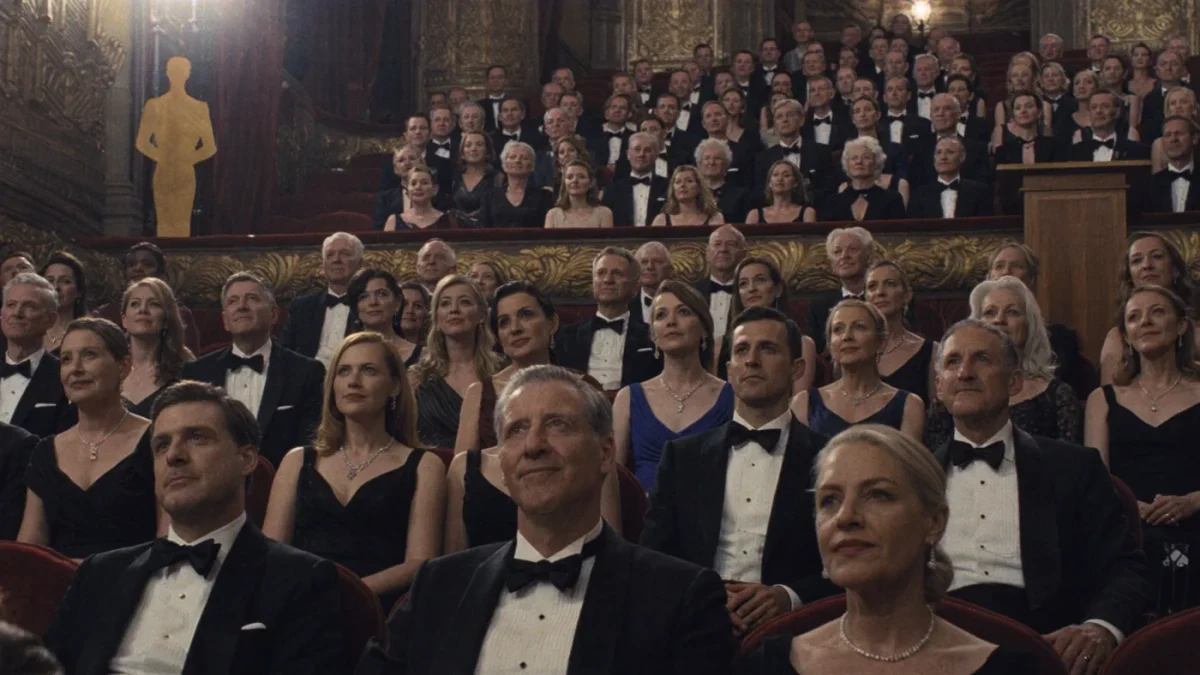
The Academy's record on subtitles was stark before 2020: in ninety-two ceremonies, no non-English-language film had won Best Picture, and only a handful — among them Roma, Crouching Tiger, Hidden Dragon, and Life Is Beautiful — had even been nominated in the top category. Parasite's win, alongside its Best Director prize for Bong, broke that streak visibly, in a ceremony broadcast worldwide. The effect compounded: Drive My Car, a three-hour Japanese drama, reached the Best Picture lineup in 2022; All Quiet on the Western Front, in German, did the same in 2023; and Emilia Pérez, in Spanish, set the nomination record for a non-English-language film with 13 in January 2025. Each step normalized the next, and by mid-decade a subtitled Best Picture nominee had stopped being a news story in itself.
What role did streaming play?
Streaming removed the distribution bottleneck. Before platforms invested internationally, a foreign-language film's US life depended on specialty distributors and art-house screens, which reached a few cities. Netflix and its competitors began commissioning local-language originals in dozens of territories — money that had previously gone mostly to English-language acquisitions — and then surfaced those titles in every subscriber's interface simultaneously. Squid Game, a Korean series Netflix commissioned, became the clearest proof: within weeks of its September 17, 2021 release, the platform reported it as its biggest series debut, and Netflix stated that a majority of viewers chose dubbed or subtitled viewing of international titles generally. Roma (2018) and The Crown-style prestige spending had already primed the model, but the scale changed in the 2020s.
What did the audience data actually show?
The most citable public numbers come from the platforms themselves. Netflix's December 2023 engagement report, covering the first half of 2023, showed non-English titles accounting for roughly 30 percent of viewing on the service. Nielsen's US ratings, separately, showed Squid Game topping weekly streaming charts for weeks in autumn 2021, dethroning English-language originals. On the theatrical side, international titles set post-pandemic benchmarks for subtitled releases: RRR, an Indian Telugu-language epic, sustained months of US engagement in 2022 on the strength of word of mouth, per distributor reports covered at the time. None of these figures came from advocacy; they came from corporate measurement, which is part of why the shift stuck — the audiences were visible in the accounting.
Which films should anchor a first subtitled watchlist?
A starter list drawn from the titles named throughout this record, each a documented entry point: Parasite (2019), Bong Joon Ho's class satire that won the 2020 Best Picture; Squid Game (2021), the Korean series that proved the audience at scale; Roma (2018), Alfonso Cuarón's Spanish-language Oscar nominee; Drive My Car (2021), Ryusuke Hamaguchi's Best Picture nominee; RRR (2022), S. S. Rajamouli's action epic; All Quiet on the Western Front (2022), Germany's Oscar-winning adaptation; and Emilia Pérez (2024), the Spanish-language musical that set the 2025 nomination record. Availability rotates across services, so check current catalogs before planning a marathon.
Did anything not change?
Plenty. Theatrical distribution for subtitled films outside major US cities remains thin; the awards gains concentrated on a narrow set of auteurs and titles; and dubbing still outdraws subtitles in many markets' viewing habits, per platform statements. The shift is real but specific: international cinema became mainstream where streaming interfaces and awards attention carried it, and it remains constrained where physical distribution still governs. For a viewer, the practical consequence is simply that more of the world's cinema is one search away than at any previous point — and the record above explains why.